


.png)

🚧 Contract Management: Automating the Construction Management Process


At a recent webinar with David Jenyns, founder of Systemology, he made a deceptively simple point: before you can automate a business, you must first identify all the business processes.
That struck a chord — because in construction, we rarely stop to ask: What are the actual processes embedded in a typical contract or subcontract?
So I put the question to an AI agent and asked it to analyse a widely used, lightly modified standard subcontract. The result was astonishing: 35 distinct, verifiable workflows — each one a contractual process that someone, somewhere, must initiate, track, and complete.
And here’s the breakthrough.
🔍 From 35 Fragmented Processes → 14 Integrated Workflows
Using current workflow‑integration technology, those 35 processes can be consolidated into:
5 one‑time workflows
1 infrequent workflow
2 core recurring workflows
6 on‑demand workflows
that plug directly into the core workflows
In other words, the entire subcontract management system — historically a maze of notices, time bars, approvals, variations, delays, claims, instructions, and correspondence — can be run through one integrated workflow engine.
This engine can connect to both legacy systems and new platforms, pulling and pushing data automatically.
📚 A Single Source of Truth
Pair this with a genuine single source of truth — where every drawing, instruction, email, program update, and site record is machine‑readable — and the system becomes self‑interrogating:
Critical actions are flagged automatically
Risks surface before they become disputes
Improvements are identified continuously
New automations emerge organically
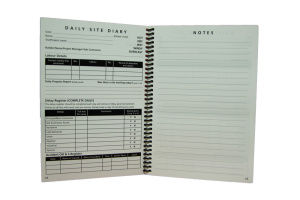
And yes — site diaries, if they weren’t already on life support, will finally disappear.
🤖 This is not hypothetical
Every component of this ecosystem already exists:
Workflow engines
Document intelligence
Contract‑aware AI
API‑driven integrations
Automated notice generation
Machine‑readable contract structures
Real‑time project data feeds
Some pieces are fully developed. Others are in late‑stage development. None of this is science fiction.
🏗️ What must change
To unlock the full potential, the industry will need:
New data standards
Machine‑readable contract structures
Shared, trusted data environments
Contracts designed for automation, not obstruction
The goal is frictionless workflows — not the risk‑trading, silo‑building, paperwork‑heavy processes we’ve inherited from the past 40 years.
🚀 The outcome
When process stops inhibiting progress:
People focus on client outcomes
Disputes reduce
Productivity rises
Margins improve
Projects become more predictable
Trust increases across the supply chain
This is the beginning of a new era in construction — one where contract management is no longer a burden but a backbone for performance.


Comments